Key Takeaways
- The aircraft: Cargolux's Boeing 747-8F, 76.25 meters long, with a 68.45-meter wingspan and a maximum takeoff weight of 449 tonnes.
- The technology: nose-loading door for oversized cargo and a rear cargo door, with capacity for up to 140 tonnes of freight.
- The impact: Noi Bai Airport confirms its capability to handle the world's largest cargo aircraft, with a 44,000-square-meter terminal and a designed annual capacity of 203,000 tonnes.
The giant that landed in Hanoi
On September 25, 2026, a Cargolux Boeing 747-8F landed at Noi Bai International Airport. The aircraft measures 76.25 meters in length, with a wingspan of 68.45 meters and a height of 19.4 meters. It is the largest pure freighter Boeing has ever built.
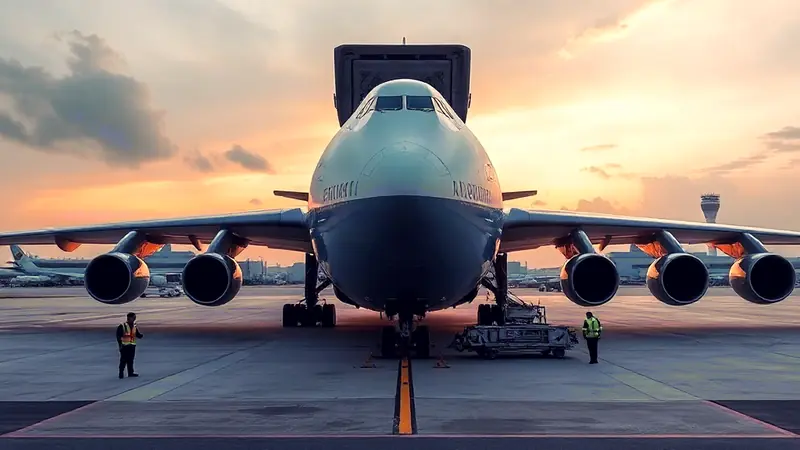
Maximum takeoff weight reaches 449 tonnes. Cargo capacity approaches 140 tonnes of freight, with a range exceeding 4,000 kilometers at full load.
A nose that opens like a bow
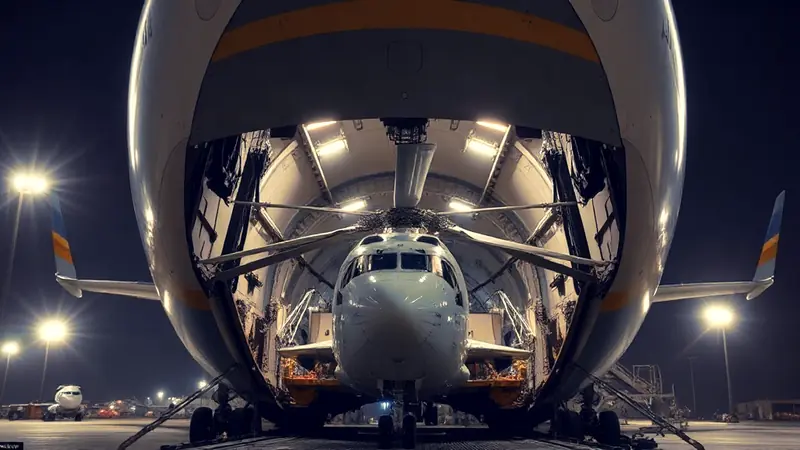
The 747-8F loads oversized cargo through its nose, which tilts upward to allow direct loading from the front of the fuselage. According to Vietnamese reports, the interior space allows for loading a helicopter or up to six buses at once. The rear section also opens, while a kneeling landing gear system lowers the fuselage floor to ease straight-line loading.
Comparison with other giants
The 747-8 remains the largest aircraft Boeing has ever produced, though not the longest overall: the Airbus A380 reaches 72.7 meters in fuselage length, shorter than the 747-8F's 76.25 meters, though it surpasses it in height and overall volume. In the pure cargo segment, the most direct comparison remains the Antonov An-124 Ruslan, 68.96 meters long and capable of carrying up to 150 tonnes in its military configuration. The 747-8F is longer and newer, but the Ukrainian aircraft still holds the record for maximum payload.
Noi Bai, infrastructure built for giants
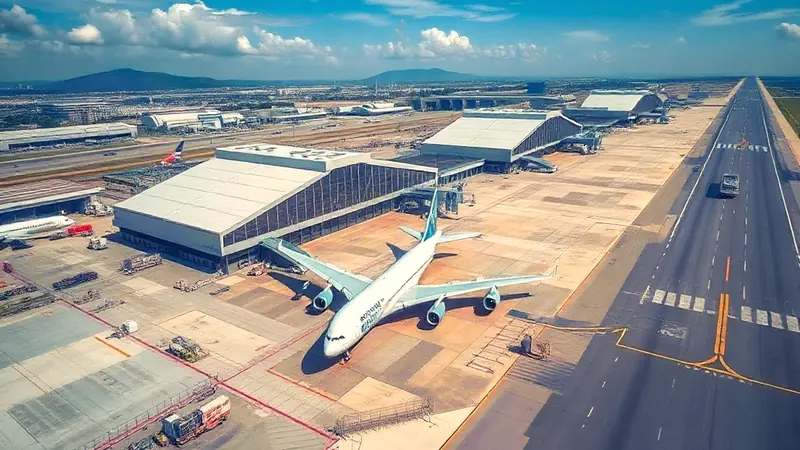
Noi Bai Airport, operated by ACV, features a 44,000-square-meter cargo terminal designed to accommodate aircraft such as the Antonov An-124, the Boeing C-17 Globemaster III, and the 747-8F itself, with a designed service capacity of 203,000 tonnes of cargo per year. Its two runways, measuring 3,200 and 3,800 meters respectively, are regularly served by international cargo operators such as Cargolux, Turkish Cargo, UPS Airlines, and Qatar Cargo.
The cargo traffic behind the landing
Vietnam is one of the region's most active production hubs, with sectors such as electronics, textiles, and components fueling steady air cargo flows. A 449-tonne aircraft taking off from Hanoi carries the direct output of local industrial production, embedded within international supply chains.
An era drawing to a close
Production of the passenger version of the 747 has already ended, and even the remaining freighter units have a limited production outlook. Aviator Jeremy Phillips, speaking about an An-124 landing at Melbourne, described these aircraft as "unique in size and in the attention they draw, one of those iconic aircraft in the world of aviation." Each landing of a 747-8F increasingly represents a rare occurrence in an industry moving toward different aircraft configurations.