Key Takeaways
- Market growth: The precision fermentation sector grew from $4.7 billion in 2025 to over $6.4 billion in 2026, with projections exceeding $100 billion by 2033.
- Core technology: Microorganisms engineered to produce animal-identical proteins, AI-designed sweet proteins (Sweelin by Amai Proteins), and protein powders synthesized from CO2 (Solein by Solar Foods).
- Environmental impact: Reductions of up to 99% in water use, 91% in land use, and 87% in emissions compared to conventional agriculture.
From Imitation to Molecular Synthesis
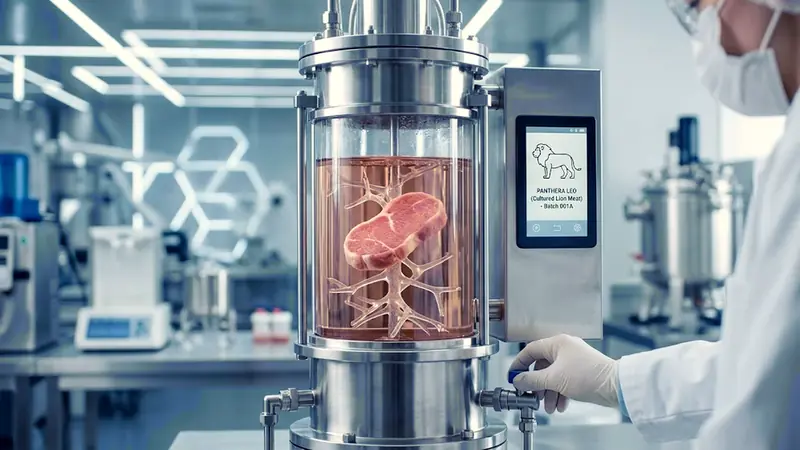
FoodTech in 2026 has moved past the logic of imitation. This is no longer about replicating the texture of meat using plant proteins — it's about programming microorganisms to generate molecules identical to those found in animals. The precision fermentation sector grew from $4.7 billion in 2025 to over $6.4 billion in 2026, posting an annual growth rate above 48% and a projected trajectory surpassing $100 billion by 2033.
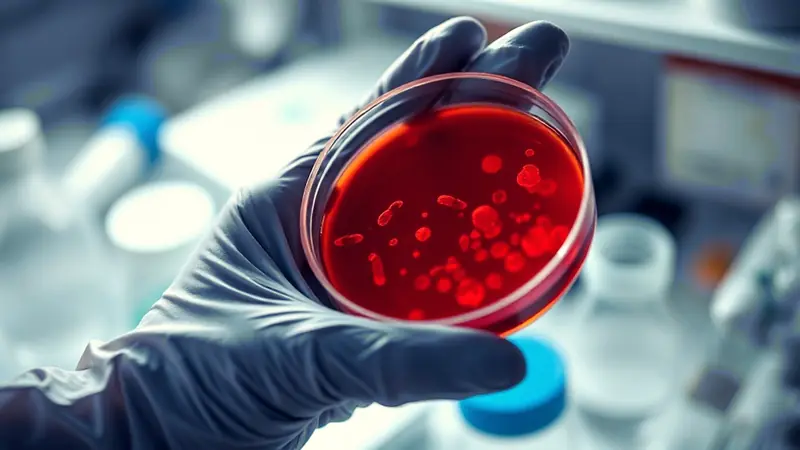
Companies including Bel Group, Strauss, and Fonterra have integrated this technology into their industrial strategies. The FAO has published reports finding no fundamentally new food safety risks associated with this approach. In the United States, the FDA has issued "No Questions" letters clearing the path for commercialization of dairy proteins produced through fermentation.
Dairy Proteins Lead the Sector
Caseins, whey, beta-lactoglobulin, and lactoferrin represent the most advanced segment of precision fermentation, thanks to well-characterized biology and high functional value. European startup Standing Ovation has demonstrated industrial-scale casein production using cheese whey as a substrate, embedding biotechnology directly into existing dairy infrastructure. The Every Co. has scaled fermentation-based production to ton-level output, addressing structural vulnerabilities in traditional supply chains.
The Solar Foods Case
Finnish startup Solar Foods patented a process in the United States in April 2026 that produces Solein, a protein powder derived from a single microbe. The organism requires no light, no fields, and no irrigation — it feeds on carbon dioxide, hydrogen, and oxygen inside a fermenter the company describes as an industrial "Soda Stream."
The final product is a powder containing 80% protein, 43% essential amino acids, and 20% BCAAs, free of cholesterol and saturated fat. Its emissions correspond to just 1% of those from conventional meat and 20% of those from plant-based proteins. Following Factory 01, the company is now developing Factory 02, which will scale production capacity from 160 to 6,400 tons annually, with launch targeted for late 2028. In the first quarter of 2026, Solein powders entered the U.S. market through a partnership with Pothos.
Artificial Intelligence Designs the Molecules
Israeli startup Amai Proteins developed Sweelin, a sweet protein derived from monellin through computational design algorithms. The molecule reduces sugar content by 40 to 70% without altering taste, remaining stable at temperatures where the original protein denatures at just 45°C.
Shiru Inc. uses its Flourish platform, built on a database of over 33 million protein sequences, to identify functional proteins through machine learning, bypassing traditional trial-and-error methods. Australia's CSIRO is developing artificial intelligence platforms to optimize protein crops and create blends tailored to individual nutritional profiles.

A Programmable Food System
The shift from natural selection to computational synthesis marks a structural transformation. Proteins no longer originate from fields or livestock — they are compiled in bioreactors and optimized by algorithms. Food production is moving away from a model dependent on climate and natural resources toward a scalable industrial model, where the determining variable is no longer available land, but the volume of data driving molecular design.